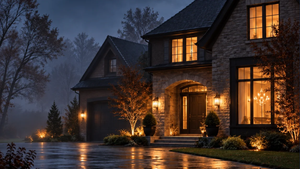
40 Acres in Mason County, Michigan: Hunting Land, Camp Base & Recreational Opportunity
By CLINT MAKI | Five Star Real Estate Midwest
What would you do with 40 acres of private Michigan land adjoining thousands of acres of public forest?
For the right buyer, a property like this represents something very different from a conventional house in a neighborhood.
It might become a hunting camp, a recreational retreat, a private homestead, or simply a place to escape the activity of everyday life.
That's the opportunity I highlighted in my May 2026 property video featuring 2995 S Tyndall Road in Branch, Michigan, a 40-acre property in Mason County.
The property included an older home requiring substantial renovation, a garage, and wooded acreage with access to the recreational opportunities of the surrounding area.
But what made this property particularly interesting wasn't the house.
It was the land—and what the right owner might be able to do with it.
Why 40 Acres Can Be an Attractive Recreational Property
Forty acres is a meaningful amount of land.
It's large enough to provide room for outdoor recreation, wildlife habitat, trails, privacy, and other potential activities, depending on the terrain and applicable land-use rules.
A traditional square 40-acre parcel measures approximately 1,320 feet on each side, although actual parcel dimensions vary.
That can create opportunities for activities such as:
Hunting and wildlife observation.
Hiking and recreational trails.
Camping and outdoor gatherings.
ATV or other permitted recreational uses.
Woodland management.
Creating a private rural retreat.
Establishing a recreational base for family and friends.
Of course, not every 40-acre property offers the same possibilities.
Topography, wetlands, access, zoning, neighboring land, and existing improvements all influence what a buyer can realistically accomplish.
The Advantage of Adjoining Federal Land
One of the distinctive characteristics of the Tyndall Road property was its adjacency to federal land.
For recreational buyers, this can be especially appealing.
A privately owned parcel bordering public land may provide convenient access to a much larger surrounding recreational environment.
In parts of Mason County and nearby areas, the Manistee National Forest offers public opportunities for hunting, hiking, fishing, and other outdoor activities subject to applicable regulations.
This arrangement can provide a combination that some buyers find attractive:
Private land for a home base, with additional public recreational land nearby.
However, adjoining federal land doesn't mean a private owner has exclusive rights to it.
Public-land access, trails, permitted activities, motorized vehicle use, and hunting rules must be verified with the appropriate managing agency.
Likewise, buyers should confirm legal property access and boundaries rather than assume every apparent trail or neighboring public parcel provides unrestricted access.
An Existing House Can Change the Possibilities
At 2995 S Tyndall Road, the existing residence was not presented as a beautifully finished home.
The house needed extensive work.
And that distinction was central to the property's marketing.
Some buyers would see the condition of the home and immediately lose interest.
Others might see an opportunity to establish a recreational base on substantial acreage.
An existing structure can potentially provide a starting point for renovation, storage, or future improvements.
But its usefulness depends on the actual condition of the building, utilities, permits, and the buyer's plans.
Before purchasing a property like this, buyers should investigate:
Foundation and structural condition.
Roof, windows, and building envelope.
Electrical service and utility availability.
Heating and plumbing.
Well and septic systems.
Possible environmental or safety concerns.
Local building and occupancy requirements.
Estimated renovation costs.
A rough house can be an opportunity, but it can also become an expensive project.
The key is understanding whether the land justifies the investment and whether the existing improvements support the buyer's intended use.
The Camp Base Concept
One way to approach a recreational property is to think of it as a base of operations rather than a traditional residential purchase.
For example, an owner might envision a simple, functional building where equipment can be stored, meals prepared, and family or friends can gather after a day outdoors.
Over time, the property might be improved as needs and resources allow.
The appeal isn't necessarily luxurious finishes.
It's having a private place from which to enjoy the outdoors.
For some buyers, that possibility has considerable value.
However, any future renovations, additional buildings, camping arrangements, or changes in occupancy must comply with applicable zoning, permitting, utility, and health department requirements.
What Should Hunting Land Buyers Look For?
Acreage alone doesn't determine recreational value.
When evaluating hunting and recreational land, I consider several factors.
1. Wildlife Habitat
Does the property contain suitable cover, food sources, natural travel corridors, or access to water?
The quality and arrangement of habitat may matter more than the total acreage alone.
2. Access and Trails
Can the owner conveniently reach different parts of the property?
Are existing trails usable and appropriately located?
Does the land provide practical access for equipment and maintenance?
3. Neighboring Properties
Are adjoining parcels privately owned, agricultural, residential, or public?
How might neighboring land uses affect recreation, privacy, and wildlife?
4. Terrain and Wetlands
Wetlands, steep slopes, or seasonal water conditions may enhance habitat while limiting certain improvements or recreational activities.
5. Buildings and Utilities
Existing improvements can contribute useful functionality, but their condition and permitted uses need to be evaluated.
6. Long-Term Ownership Costs
Taxes, insurance, access-road maintenance, forestry work, utility expenses, and building repairs all influence the cost of ownership.
Understanding these details helps buyers determine whether a property suits their needs and budget.
What About the Pere Marquette River Area?
The Tyndall Road property is situated in a region known for its outdoor recreational opportunities, including the broader Pere Marquette River area.
For people who enjoy fishing, canoeing, kayaking, and exploring Michigan's forested landscapes, the surrounding region offers additional appeal.
The important distinction is that proximity to a river or recreational destination is not the same as owning river frontage or having deeded private access.
Buyers should verify the actual location of public access sites and the activities permitted there.
How Do You Determine the Value of 40 Acres With a Rough House?
This is where specialized property analysis becomes especially important.
For a conventional home, comparable residential sales often provide a relatively straightforward starting point.
For a 40-acre recreational property with substantial renovation needs, the process may require several different considerations.
The land: What have comparable wooded and recreational parcels sold for?
Location: How does public-land adjacency affect demand?
Access: Are roads, entrances, trails, and boundaries practical and legally established?
Existing improvements: Does the house contribute value, or do its condition and renovation needs reduce the property's appeal?
Utilities: Are necessary systems functional, repairable, or in need of replacement?
Recreational potential: What characteristics distinguish the acreage from competing properties?
Buyer demand: Who is most likely to purchase the property, and what alternatives are available?
A buyer interested primarily in recreation may evaluate the opportunity differently from someone seeking a move-in-ready home.
That's why I believe the marketing and valuation should begin with understanding the property's strongest characteristics.
Why Marketing the House Alone Would Miss the Opportunity
One lesson from the Tyndall Road property is that unusual real estate should not always be marketed using conventional residential priorities.
If we focused exclusively on the house's condition, we could overlook the audience most likely to appreciate the property.
For someone seeking a finished residence, the house's deficiencies might dominate the decision.
But someone looking for acreage adjoining public land may see an entirely different opportunity.
For that audience, the appeal could involve privacy, land use, outdoor recreation, and long-term improvement potential.
This doesn't mean minimizing or concealing property defects.
Quite the opposite.
Effective marketing means being transparent about the property's limitations while clearly explaining what makes it desirable.
That approach helps attract buyers whose expectations are aligned with what the property actually offers.
A Different Approach to Selling Recreational Acreage
When I evaluate an unusual property, I ask several questions.
What is its most valuable characteristic?
Who is most likely to appreciate that characteristic?
What problems or limitations should buyers understand?
Which competing properties offer similar opportunities?
And how can the marketing accurately communicate the property's potential?
A recreational property might benefit from aerial photographs, land maps, boundary information, trail details, and photographs showing the relationship between the acreage and its surroundings.
For properties adjoining public land, documented location information is particularly useful.
If conceptual or AI-enhanced imagery is used to illustrate possible improvements, it must be clearly disclosed and distinguished from photographs of existing conditions.
The goal is to help buyers understand both the property as it exists and the possibilities they may choose to investigate.
What Mason County Landowners Can Learn
Not every owner has 40 acres or a house needing extensive renovation.
But the same principles apply to many unusual Michigan properties.
A small hunting parcel may appeal to an entirely different audience than a conventional residential lot.
A log cabin with acreage may have value that isn't apparent through ordinary price-per-square-foot comparisons.
A home with significant deferred maintenance may still occupy land with desirable recreational characteristics.
Accurate valuation and effective marketing require understanding those differences.
My Approach to Michigan Recreational Property
After approximately four decades in Michigan real estate, I've learned that the most interesting properties often require the most thoughtful analysis.
A property doesn't have to be perfect to be valuable.
But its value needs to be understood in the context of its condition, location, land characteristics, market demand, and realistic future uses.
Whether I'm evaluating a lakefront cottage, a log home, a wooded hunting parcel, or a rural property with unusual improvements, my objective is to identify what distinguishes it and develop a strategy around the buyers most likely to appreciate it.
Thinking About Selling Hunting Land or Recreational Acreage in Michigan?
If you own wooded acreage, hunting land, a cabin, a rural homestead, or another unique Michigan property, conventional online valuations may not accurately reflect its characteristics.
A more detailed evaluation can help identify the property's likely buyer audience, competitive position, and appropriate marketing strategy.
I specialize in waterfront, lakefront, recreational acreage, log homes, cabins, and other unusual properties throughout West Michigan.
If you're considering selling, I'd be happy to help you evaluate the property and discuss your options.
CLINT MAKI
Real Estate Broker | Five Star Real Estate Midwest
Michigan Waterfront, Recreational Acreage & Unique Property Specialist
616-227-4887
LakefrontMichigan.com
Property showcase note: This article discusses 2995 S Tyndall Road as featured in a May 2026 marketing video. Historical property information is provided for educational purposes and does not establish current availability, price, building condition, or permitted future uses.