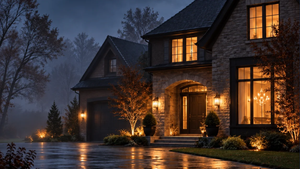
660 Private Acres in Michigan: Inside an Extraordinary Hunting and Recreational Estate
By CLINT MAKI | Five Star Real Estate Midwest
What does it look like to own more than an entire square mile of private land in Michigan?
Imagine a custom hunting lodge surrounded by managed forest, abundant wildlife, private recreational trails, a pond, and enough acreage to create an extraordinary level of privacy.
That's the kind of opportunity represented by 101 N Wyman Road in Remus, Michigan, a remarkable 660-acre recreational estate in Isabella County.
I featured this property in a September 2026 video because it illustrates something I've learned through decades of working with unusual Michigan real estate:
When a property is this distinctive, evaluating it requires a completely different approach from valuing an ordinary residential home.
The land, wildlife habitat, infrastructure, recreational opportunities, and long-term ownership considerations may be every bit as important as the residence.
A 660-Acre Property Is More Than a Large Backyard
To appreciate the scale of this estate, consider that one square mile contains 640 acres.
At 660 acres, this property encompasses slightly more than one square mile.
That's substantial enough to support a wide range of recreational and land-management activities within one ownership.
According to its published listing, approximately 640 acres are managed forest, with the balance associated with the residence and other improvements.
The property's wooded terrain, wildlife habitat, and relative seclusion contribute to its unusual appeal.
For buyers who want more than a weekend hunting parcel, the scale creates opportunities that smaller tracts may not provide.
The Custom Lodge: Built for Recreation and Year-Round Enjoyment
At the center of the estate is a custom residence constructed in 2014.
The published property information describes approximately 3,270 square feet of finished living area, with three bedrooms and two full bathrooms plus a half bath.
The home has the appearance of a traditional log lodge, but its construction is particularly interesting.
Rather than conventional solid-log construction, the exterior uses a cast-concrete system designed to resemble authentic logs.
This distinction matters because construction methods influence maintenance, durability, and how a property should be evaluated.
The home's advertised features include:
Vaulted interior spaces and exposed-beam styling.
Stone fireplaces on two levels.
A dedicated bunk room.
Heated flooring.
A covered porch.
Andersen windows.
Central vacuum and integrated sound systems.
A rustic design suited to a private recreational retreat.
The residence provides a comfortable base for enjoying the property throughout the year.
But the lodge is only one component of the estate's overall value.
Managed Forest and Wildlife Habitat
One of the property's most significant characteristics is its extensive managed woodland.
The listing describes approximately 640 acres of forest enrolled in Michigan's Qualified Forest Program.
This program can provide property tax benefits to eligible landowners who meet specified forest-management requirements.
It also involves obligations, including maintaining an approved forest management plan and complying with program conditions.
Anyone considering purchasing property enrolled in this program should investigate the enrollment status, required management activities, transfer procedures, and potential consequences of changing the land's use.
Beyond the financial considerations, managed forestland can contribute to wildlife habitat, recreational opportunities, and long-term stewardship.
For a serious recreational land buyer, understanding how the property has been managed is essential.
Hunting Infrastructure and Wildlife Management
The estate's published listing describes a substantial collection of hunting and wildlife-management improvements.
These include:
Eleven hunting blinds and stands.
Twelve game cameras.
Established wildlife habitat.
Apple trees that may provide food and wildlife attraction.
A private pond.
Managed woodland and recreational acreage.
Those improvements suggest the property has been developed with long-term recreational use in mind.
However, the value of hunting land cannot be determined simply by counting blinds or cameras.
Experienced recreational property buyers will also consider habitat quality, wildlife movement, neighboring land use, access routes, terrain, and the property's management history.
A property with an established hunting infrastructure may offer advantages compared with raw acreage, but those advantages must be evaluated in context.
A 3,000-Square-Foot Pole Barn Adds Practical Utility
A large recreational property requires equipment, maintenance, storage, and supporting infrastructure.
The published listing describes a 40-by-75-foot pole barn, providing approximately 3,000 square feet of space.
Features include multiple oversized overhead doors, a heated section, water, and a floor drain.
For a property of this scale, that space can be particularly useful for storing tractors, utility vehicles, recreational equipment, and maintenance tools.
The infrastructure can make a significant difference in how efficiently the land can be managed.
A buyer should also determine which equipment and implements, if any, are included in a purchase agreement rather than assuming everything visible at a property conveys with the sale.
What Makes 660 Acres Different From a Typical Hunting Property?
Large recreational tracts are not simply scaled-up versions of small hunting parcels.
At this size, land characteristics and ownership logistics become increasingly important.
A buyer should understand several factors.
Access and Internal Circulation
Can you reach the different portions of the land conveniently?
Are roads and trails usable throughout the year?
Do seasonal wet areas limit access?
How much maintenance is required to keep the property accessible?
Boundaries and Survey Information
A property this large may have extensive boundaries, irregular configurations, or adjoining landowners.
Survey information and recorded access rights deserve careful review.
Wildlife and Habitat
The amount of acreage is important, but so are the quality and diversity of habitat.
Managed timber, openings, water sources, and neighboring land uses can influence recreational value.
Land Management Obligations
Forest-management programs, timber plans, conservation restrictions, and other obligations can affect future use.
Long-Term Ownership Costs
Taxes, insurance, road and trail maintenance, building upkeep, forestry management, and equipment expenses all deserve consideration.
A property of this magnitude should be evaluated as an integrated recreational estate—not just a home surrounded by trees.
How Do You Determine the Value of a Property Like This?
This is where unusual real estate becomes especially interesting.
With a conventional residential property, there may be several recent comparable sales within a relatively small geographic area.
For a 660-acre recreational estate with a custom lodge, extensive hunting infrastructure, and managed forest, truly comparable properties can be difficult to find.
The analysis may need to consider:
Land value: What have other large recreational and wooded tracts sold for?
Improvements: What value does the residence, pole barn, and supporting infrastructure contribute?
Habitat and recreational utility: How does the property's terrain, forest, wildlife habitat, and access compare with competing properties?
Timber considerations: Is there professionally documented timber value or income potential?
Ownership restrictions: Do conservation agreements, forestry programs, easements, or other restrictions influence use and marketability?
Buyer demand: How many qualified buyers are realistically searching for a property of this type and price range?
Market exposure: How should a property be presented to reach buyers beyond the immediate local community?
These questions are important because price per acre alone may be misleading.
A property with substantial improvements, documented management, and unusual recreational characteristics cannot necessarily be compared directly with undeveloped woodland.
Likewise, the existence of a lodge and hunting infrastructure does not automatically establish that every dollar spent on improvements will be recovered in a sale.
Understanding the Asking Price
The property was advertised at $4,590,000 when I featured it in September 2026.
Dividing that figure by 660 acres produces an asking price of approximately $6,955 per acre.
But this calculation includes the residence, pole barn, and other improvements.
It should not be interpreted as an independent estimate of the land's per-acre value.
Nor does an asking price establish what the property will ultimately sell for.
For an estate this unusual, determining market value requires much more analysis than dividing a total price by the acreage.
The asking price above is provided as historical context for the September 2026 video, not as a guarantee of current availability or pricing.
The Importance of Marketing Unique Michigan Properties Correctly
An unusual property needs an unusual marketing strategy.
A 660-acre recreational estate is unlikely to appeal to precisely the same audience as a conventional home in a nearby subdivision.
Potential buyers may include recreational landowners, hunting enthusiasts, private-estate purchasers, and people interested in long-term land stewardship.
The marketing should clearly communicate:
The overall scale of the property.
Land configuration and accessibility.
Wildlife habitat and recreational features.
Forest-management history.
Infrastructure and improvements.
The home's construction and amenities.
Potential ownership considerations.
Professional aerial photography, mapping, video, accurate property documentation, and carefully targeted exposure are especially important.
The objective is to help the right buyer understand the property's actual capabilities, rather than relying on exaggerated language or generic property descriptions.
What Sellers of Recreational Acreage Can Learn
Most landowners don't own 660 acres.
But many of the same principles apply to smaller properties.
Whether someone owns 10 acres, 40 acres, 100 acres, or a substantial private estate, the important questions include:
What makes the land useful?
What distinguishes it from competing properties?
How should improvements be evaluated?
Who is the likely buyer?
And what evidence supports the proposed asking price?
A property with mature woodland, water features, usable trails, quality outbuildings, or specialized recreational improvements may require more thoughtful valuation and marketing than a conventional residential lot.
That is one reason I enjoy working with Michigan's unique properties.
My Approach to Recreational and Unique Real Estate
After approximately four decades working in Michigan real estate, I've learned that some properties simply don't fit neatly into conventional valuation models.
Large acreage, hunting land, log homes, cabins, waterfront estates, and unusual residences require attention to the characteristics that make them different.
The house may be only part of the story.
The land, infrastructure, access, recreational utility, and likely buyer audience can be equally important.
When evaluating these properties, my objective is to understand their distinguishing characteristics, examine relevant market evidence, and help owners develop realistic pricing and marketing strategies.
Thinking About Selling Recreational Acreage or an Unusual Michigan Property?
If you own wooded acreage, a hunting property, a log home, a recreational retreat, or another unusual property in Michigan, the right marketing strategy begins with understanding what makes it valuable.
I specialize in lakefront, waterfront, recreational acreage, log homes, and unique properties throughout West Michigan and surrounding markets.
If you're considering selling, I'd be happy to help you evaluate your property and discuss how to position it for the most appropriate buyer audience.
CLINT MAKI
Real Estate Broker | Five Star Real Estate Midwest
Michigan Waterfront, Recreational Acreage & Unique Property Specialist
616-227-4887
LakefrontMichigan.com
Property showcase disclosure: 101 N Wyman Road was publicly marketed by CENTURY 21 White House Realty. This article is an independent educational property analysis and does not imply that CLINT MAKI was the listing broker. Property information should be independently verified before making purchasing decisions.